What’s on our cameras?
As part of our ongoing efforts to combat snare-setting and to keep an eye on our wildlife, we regularly set trail cameras in the bush surrounding Bazley. Thankfully, there has recently been very little evidence of snare-setting and a lot of wildlife activity captured on the cameras.
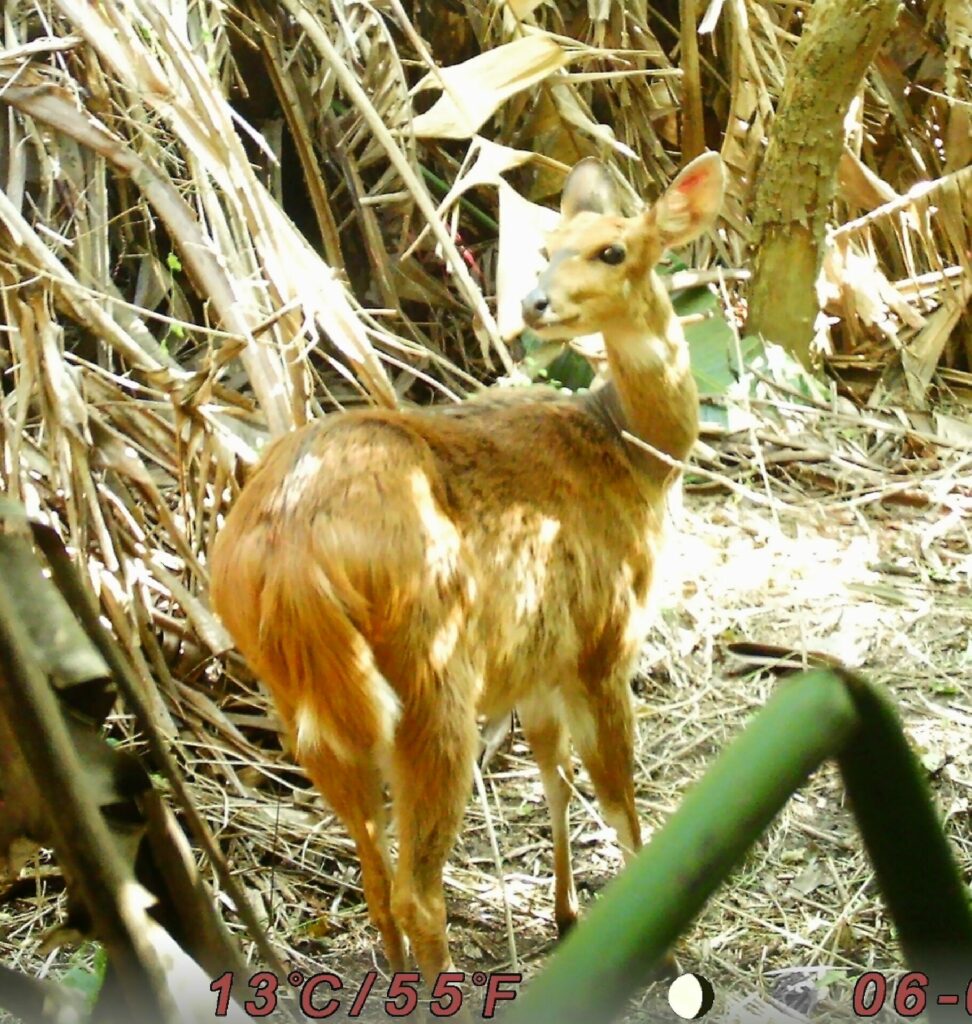
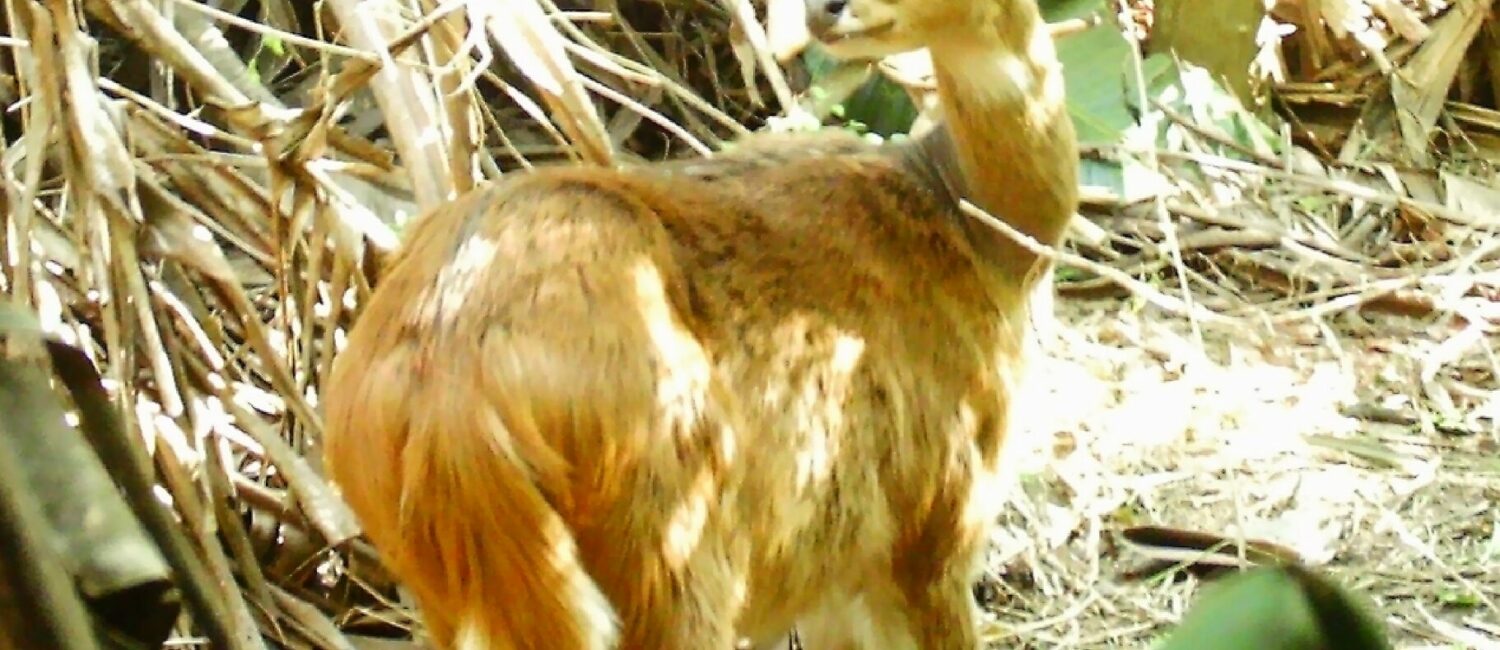
Recently we have been inundated with photos of our resident bushbuck and blue duiker. Residents and visitors to Bazley will have regularly seen both in and around our town.
Male and female bushbuck are very different. Males are grayish in colour, significantly heavier and taller, and have distinctive, twisted horns. The females, besides being smaller and without horns, are a reddish-brown colour.
The blue duiker is the smallest antelope in Southern Africa, only weighing around 4kg. Unlike the bushbuck, both sexes are quite similar; being blue-grey in colour, a similar size and both carrying short sharp horns.
In addition to the two antelope, we have also caught two more rather uncommon residents on our cameras: a porcupine and a large-spotted genet. Given that both are typically nocturnal, you will notice that both photos are night shots taken using the camera’s infrared technology.
Cape porcupines are the largest and heaviest of all African rodents (10-30kg) and also the heaviest porcupines in the world. Their most recognisable feature is, of course, their quills which can reach a length of 30cm and lodge in the skin like fishhooks, making them very difficult to remove.
The large-spotted (or Cape) genet is endemic to South Africa and is both nocturnal and arboreal. It is related to the cat family but not as closely as it is to civets and mongooses; however, it does resemble a cat and shares many of their characteristics and behaviours.