Meet the Blue Duiker: Bazley’s Tiny, Secretive Antelope
Small enough to disappear beneath the undergrowth, beautifully adapted to our coastal forest and far more fascinating than its shy nature might suggest.
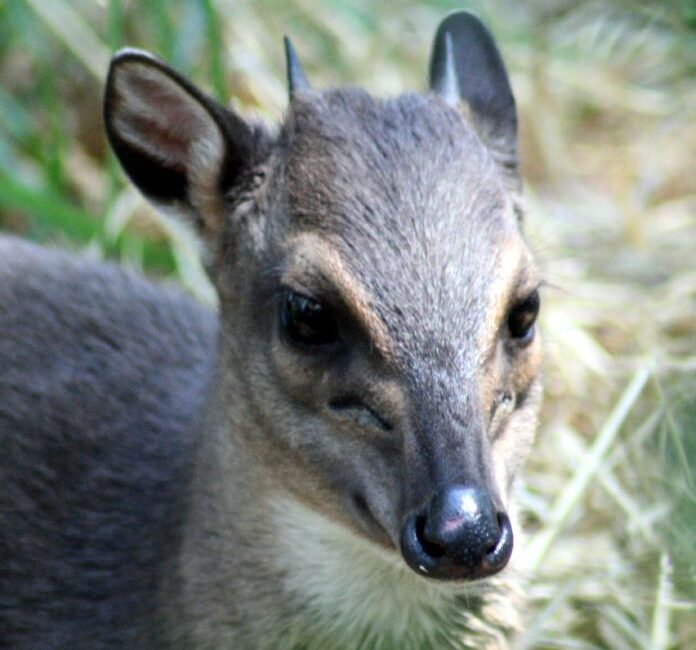
Hidden within Bazley’s coastal vegetation lives South Africa’s smallest antelope: the blue duiker (Philantomba monticola), known in isiZulu as iPhithi.
Many of us may never see one, even though they could be living surprisingly close to our homes. Blue duikers are masters of concealment, slipping silently through dense vegetation and disappearing into the undergrowth at the first sign of danger.
Catching even a fleeting glimpse of one is something special.
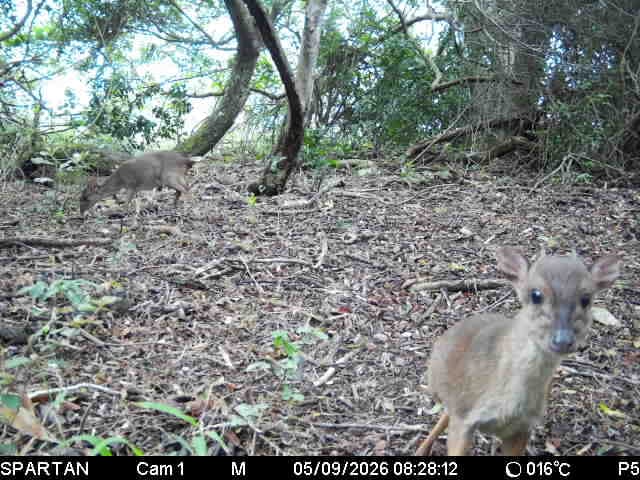
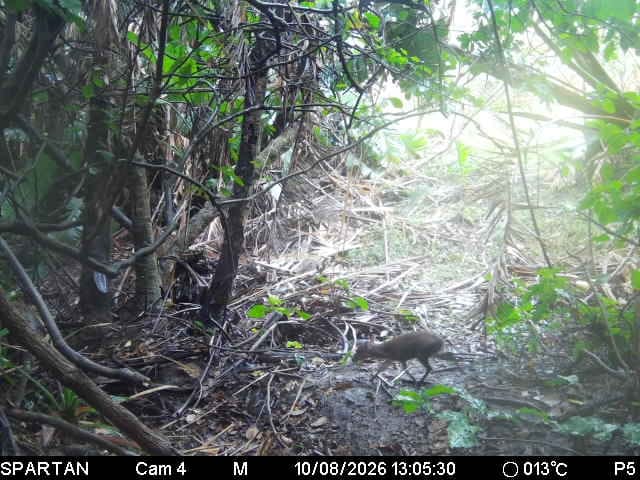
The photograph accompanying this article shows a pair of courting blue duikers in a small clearing in the riverine forest above the Ifafa River. It was captured by one of the B.R.A. Conservancy team’s trail cameras.
A difficult animal to study
Much about the blue duiker remains difficult to establish with certainty, and information from different research sources does not always agree.
There are several reasons for this. In South Africa, blue duikers have a very limited distribution, occurring mainly within the coastal forest belt of southern KwaZulu-Natal and the Eastern Cape. They are also extremely reclusive and difficult to observe.
Their numbers have declined to the extent that the blue duiker is now classified as Vulnerable nationally. This combination of limited distribution, declining numbers and secretive behaviour makes reliable research and population estimates particularly challenging.
Small in stature, perfectly designed for the forest
Standing only about 32–41 cm at the shoulder and weighing around 4–5 kg, a blue duiker is not much taller than a small dog.
Its compact body allows it to move through places that would be difficult for larger antelope to navigate. Dense coastal forest, tangled thicket and thick natural undergrowth are not obstacles to a blue duiker—they are exactly what it needs to survive.
This vegetation provides food, protection from predators, places to rest and safe cover in which to raise its young.
Why is it called a “blue” duiker?
The animal is not literally blue. Its short, blue-grey coat can take on a distinctly bluish appearance in the soft shade of the forest.
The word duiker comes from an Afrikaans word meaning “diver” or “diving buck”. It describes the animal’s characteristic response to danger: rather than running across open ground, it dives into thick vegetation and disappears.
This remarkable ability to remain hidden is one of the reasons blue duikers are so difficult to count.
Did you know?
- Females are slightly larger than males. A male generally weighs around 4 kg, while a female may weigh closer to 4.7 kg.
- Both males and females have horns. Their short, sharp horns are about 5 cm long and may be almost completely hidden beneath the hair, particularly in females.
- They communicate through sound and scent. Males may make a whistling or sneezing sound when alarmed, while mothers and their young communicate using soft growls. Scent glands beneath their eyes are used to mark their surroundings.
- They seldom need to drink. Blue duikers obtain most of the moisture they require from the food they eat.
- A female normally gives birth to one youngster. After a gestation period of approximately seven and a half months, the newborn is concealed in thick vegetation during its vulnerable first weeks.
- They can live for more than a decade. Their lifespan in the wild is estimated at around 10–12 years.
A solitary and secretive life
Blue duikers tend to be solitary and spend much of their lives hidden within dense vegetation. They are generally seen together only when courting or when a female is caring for her youngster.
This private way of life, combined with their small size and excellent camouflage, means that blue duikers may occupy an area for years without being noticed by the people living nearby.
Life beneath the forest canopy
Blue duikers are browsers, feeding mainly on leaves, young shoots, flowers, berries, fallen fruit and fresh plant material found on the forest floor. They may also dig for roots and tubers.
They have developed an interesting relationship with animals living above them. Blue duikers sometimes follow monkeys, baboons and fruit-eating birds through the forest, feeding on fruit and leaves dislodged from the canopy.
Although predominantly herbivorous, they have occasionally been recorded eating insects and birds’ eggs.
Predators and survival
The blue duiker’s instinct to remain beneath thick cover is essential to its survival. One of its most significant natural predators is the Crowned Eagle, a powerful forest eagle capable of hunting small antelope.
Other predators may include caracal, pythons and other indigenous animals. These natural relationships form part of a balanced ecosystem.
Human-related threats, however, place additional and often unsustainable pressure on blue duiker populations.
Why healthy vegetation matters
A blue duiker does not need a vast wilderness, but it does need dense, connected vegetation.
Research has shown that blue duikers can survive in forest patches on private properties, within residential areas and in local conservancies. This makes the natural vegetation remaining in communities such as Bazley particularly important.
An overgrown patch of indigenous vegetation may look untidy to us, but to a blue duiker it could be a feeding area, resting place, nursery or vital passage between two sections of forest.
When natural vegetation is cleared and forest patches become isolated, these tiny antelope are forced to cross open ground and roads, leaving them far more vulnerable to dogs, vehicles and people.
A vulnerable South African species
In South Africa, the blue duiker is classified as nationally Vulnerable, and its population is declining.
The main threats include:
- Loss and fragmentation of coastal forest and thicket
- Snares and illegal hunting
- Hunting and chasing by dogs
- Roads and vehicle traffic
- The isolation of small populations from one another
Blue duikers are not necessarily the intended targets of snares. Their habit of repeatedly using small pathways through dense vegetation, however, makes them extremely vulnerable to indiscriminate trapping.
How Bazley residents can help iPhithi
Protecting the blue duiker begins with protecting the habitat it depends upon.
Residents can help by:
- Retaining indigenous undergrowth and natural thicket wherever possible
- Allowing connected corridors of vegetation between properties
- Planting indigenous, fruit-bearing forest species
- Keeping dogs securely contained and under control
- Driving slowly, particularly around dawn and dusk
- Remaining vigilant for snares and reporting anything suspicious
- Avoiding pesticides and poisons that could harm wildlife
- Leaving concealed young animals undisturbed
If you see a young blue duiker hidden in the vegetation, resist the temptation to approach or move it. Its mother may be nearby, remaining out of sight until the area is safe again.
Tiny animal, important message
The survival of the blue duiker tells us something about the health of our coastal environment. Where iPhithi continues to find food, shelter and safe passage, it means some of the intricate natural connections within the landscape remain intact.
The blue duiker may be one of Bazley’s smallest residents, but it represents something much larger: the wild, naturally beautiful character of our village.
By protecting our indigenous vegetation, controlling our dogs and remaining vigilant against snaring, we can help ensure that this remarkable little antelope does not quietly disappear from Bazley.
Information sources include the South African National Biodiversity Institute and observations and trail-camera footage recorded by the B.R.A. Conservancy team.