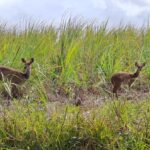
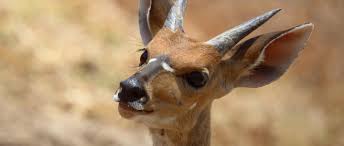
Bazley’s shy beauty: Celebrating our beloved Bushbuck
If there is one creature that embodies the quiet beauty of Bazley’s natural world, it is the bushbuck. Graceful, elusive, and surprisingly adaptable, the bushbuck is one of our most cherished residents—often glimpsed in the early morning light or slipping silently into the dense coastal vegetation as we approach.
A life lived in solitude
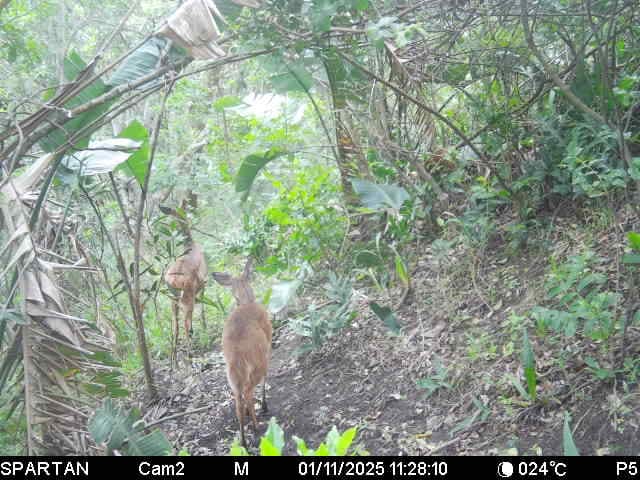
Unlike many antelope species that gather in herds, the bushbuck tend to be solitary by nature,this is particularly so of the male which will only mix for short periods during breeding.The female is often seen in company with its young, a foal and sometimes a juvenile as well. She will also gather in small foraging groups with other females and their young.
Instead of defending territories, they live in overlapping “home ranges”—typically around 50 000 square metres in savannah areas, and even larger in forests. This is part of the reason they are so difficult to spot; a bushbuck can live on your doorstep without you ever realising it.
Beautiful, shy and exceptionally adaptable
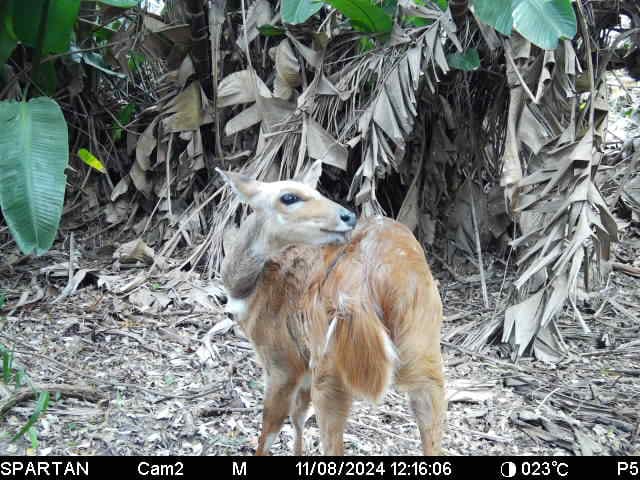
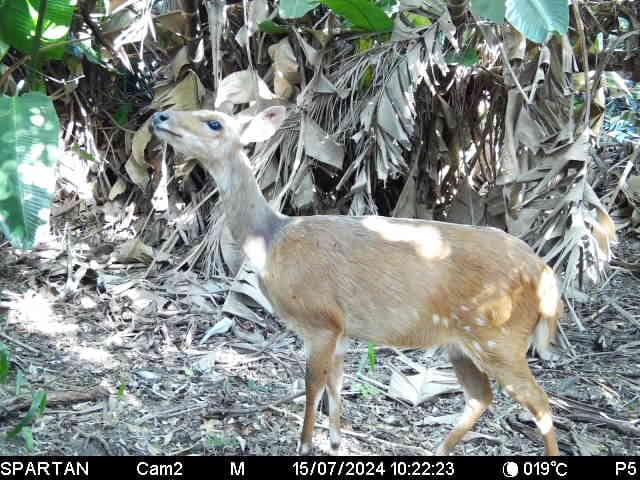
Each bushbuck carries its own unique pattern of white spots and stripes, almost like a fingerprint. Males tend to be darker—chestnut or chocolate brown—while females are lighter with more visible markings. Their coats are perfectly designed for what is referred to as “disruptive colouration”, breaking up their shape in dappled forest light and helping them avoid predators.
Bushbuck are found on the south eastern coastal belt and the eastern and northern parts of the country primarily in riverine forest and bush associated with water from coastal dune bush to mountain forest, from sea level to an altitude of 1800m.
Here in Bazley, they make excellent use of our thickets, coastal scrub and shady riverine areas, often venturing out only when they feel safe.
Secretive habits and a mostly nocturnal lifestyle
Bushbuck are most active during the early morning, evening, and throughout the night, especially in areas where humans are close by. By day, they prefer to rest deep in cover, only moving occasionally to feed. Their quiet, deliberate behaviour is one of their greatest survival tools—they can melt into the vegetation without a rustle.
When alarmed, they may freeze completely, lie flat on the ground, or bolt suddenly with a series of sharp, hoarse barks that resemble a dog’s warning call.
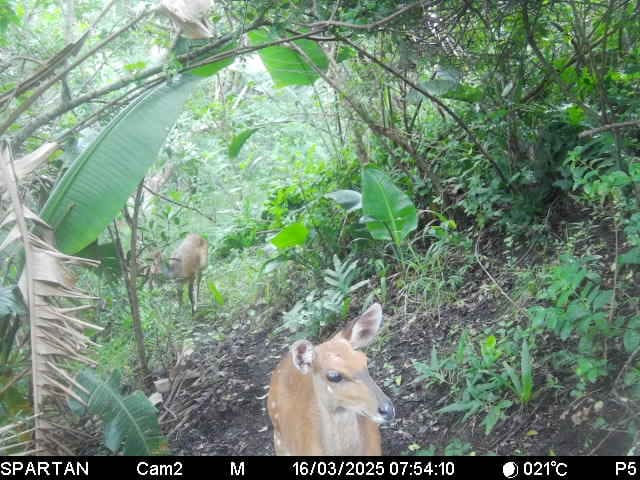
Trail-Cam treasures: Bushbuck moments from around Bazley
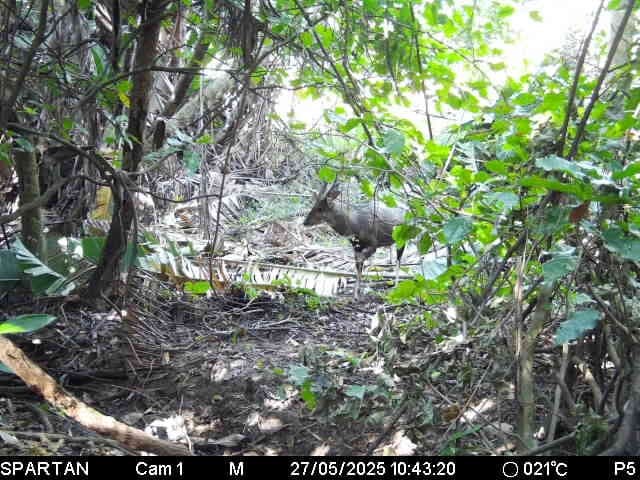
Mothers and their hidden nurseries
A particularly charming aspect of bushbuck behaviour is the way mothers care for their young. After giving birth to a single calf (following a seven-month gestation), the mother hides her newborn deep in thick vegetation. She visits only to nurse, leaving no scent trail that could attract predators. The fawn will stay hidden for up to four months, remaining perfectly still—its survival resting entirely on camouflage.
Females mature at around 14 months, while males reach maturity earlier but generally only mate from about three years of age.
A flexible diet and remarkable adaptability
Bushbuck are browsers, feeding on leaves, twigs, fallen fruits, flowers and shrubs. Their ability to eat a wide range of plant material helps them thrive in many different habitats. During dry periods, when food is scarce for other animals, the bushbuck can continue feeding on evergreen shrubs and fruit, allowing them to remain active year-round.
Quiet communicators: barking and scent-marking
Although usually silent, bushbuck can give out a loud bark when startled—a sound that often alerts other wildlife to danger. They also rely on scent to communicate, with males marking their range using glands and urine to signal dominance and boundaries.
A strong swimmer and a surprising companion
Bushbuck are excellent swimmers and have been recorded crossing rivers up to three kilometres wide. Despite being solitary, they sometimes tolerate the presence of other species, and in reserves like Hluhluwe-Imfolozi they can often be seen alongside nyala.
Protecting a much-loved local resident
Sadly, habitat loss and hunting remain threats to bushbuck across Africa. Expanding agriculture, development, and road networks reduce the quiet spaces they rely on. Here in Bazley, every patch of untouched vegetation gives these shy antelope a chance to survive and thrive.
If you’re lucky enough to spot one, take a moment to appreciate the privilege. Seeing a bushbuck means you’re in a place where nature still whispers rather than shouts—where the wild remains free to move quietly among us.
A bushbuck sighting is one of Bazley’s greatest gifts.