The railway was built in stages, first the line from Durban to Clairmont and the Bluff, first in 1875. In 1900 the line was extended southwards, and in 1903 Merebank was still the site of a refugee camp that housed 8500 Boer men women and children refugees.
From Isipingo the line branched to Umkomaas, through Umbogintwini and Amanzimtoti (named for its sweet water by Shaka Zulu). Then on to Winklespruit, Umgaba, and Illovo (now Warner Beach). Most of these stops were popular for weekend daytrips for picnics, fishing and swimming. The rivers were pristine, as was the untouched bush.
The next phase was to Alexander Junction (now Kelso), where a branch line headed to Umzinto, the main town of the area known as Alexander County, which included Bazley. The Magistrates Court, Post Office, Military Barracks, banks, and businesses were all situated in Umzinto. Henry Francis Fynn of Shaka Zulu fame was at one time magistrate. At this time, there were several sugar mills, including Esperanza, near Umzinto, Renishaw at Scottburgh.
The line progressed to Pennington, Sezela, Bazleys Halt and Ifafa, and finally reached Port Shepstone in 1907, putting an end to the need for a harbour.
Between Park Rynie and Port Shepstone were twenty-two bridges, and a total of 1850 metres of bridges, the Ifafa being the longest at 231 m. The railway took a line through present-day McNichols Caravan Park and passed through a deep cutting on the Ifafa side. Us old-timers had much fun diving off the old steel piers, and the Ifafa lagoon was so deep in parts that we could not reach the bottom. Most of the piers were still intact in the 1960’s.
The railway line was a tremendous boon to the economic prospects of the South Coast, with its abundant minerals, such as lime at Port Shepstone, sugar and it provided mobility to the numerous villages that had developed, such as Marburg where Norwegian immigrants settled in 1882.
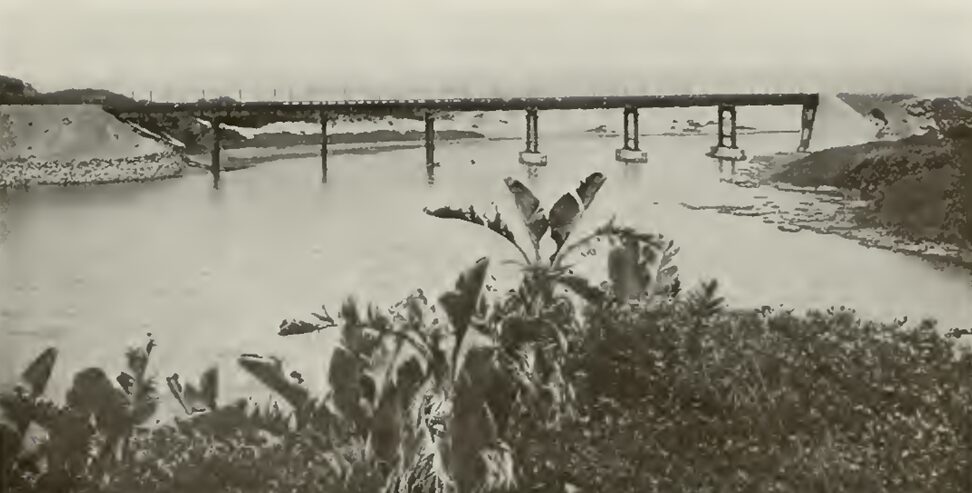
A typical South Coast railway bridge. The Ifafa River bridge was the longest, at 231m long. |
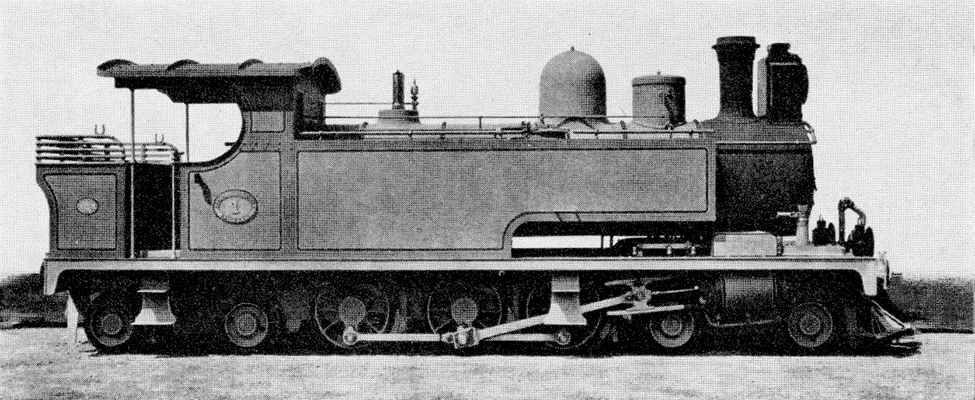
A Natal Government Railway Class E 4-6-4T locomotive of the 1890 to 1910 era.
These locomotives were built specifically for use on the Natal South Coast, where reverse running was required due to the absence of turning facilities such as turntables.
An extract from the South Coast Railway line encouraging visitor travel in 1903
At most of the seaside places, cottages on the beach can be hired for varying periods. The fishing and shooting are good the coast through. All kinds of shellfish are found in abundance at many points along the coast, and at the mouths of some of the rivers. A warning should be given to bathers not to venture upon a “dip” before assuring themselves as to the safe spots. At some places, the slope of the beach is so acute, and the backwash so exceedingly strong, that an element of danger would be incurred by ignoring this precaution.
For a deeper exploration of Bazley’s rich history, you can acquire the book “Nil Desperandum: The Bazley Story” written by Denzil Bazley. To learn more and obtain a copy, please reach out to him via email at bazley@mweb.co.za
As an aside, in the 1970’s, Denzil would catch the 09:30 train to Sezela to buy essentials like bread and milk, and catch the 10:30 return train to Bazley. Fare was 5 cents and most often the conductor would not reach us, so it was a windfall of Chappies bubblegum, which sold 2 for a cent!