
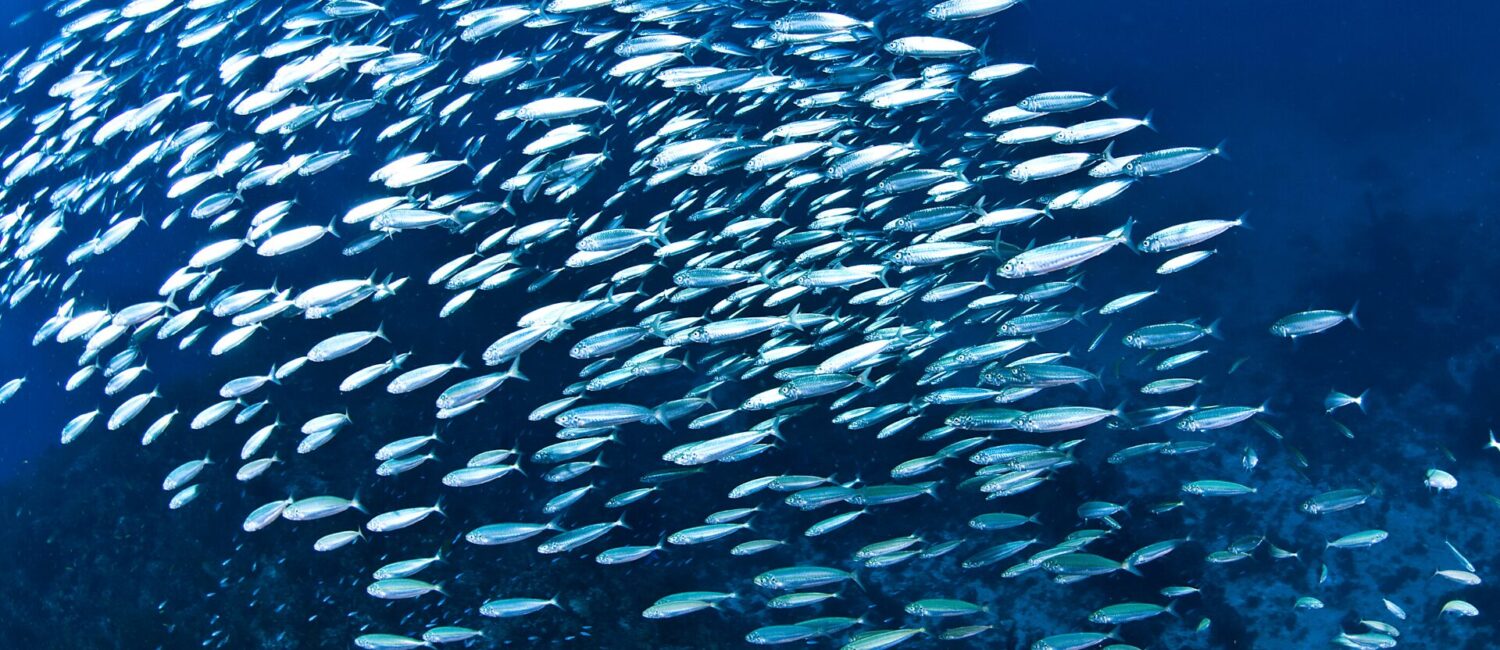
Winter in KwaZulu-Natal is synonymous with the sardine run, a breathtaking event where millions of sardines travel from the Cape to KZN.
This migration not only excites local enthusiasts who net the fish but also attracts gamefish anglers eager to catch the predators following the sardines.
The Greatest Shoal on Earth
For years, the reason behind this perilous journey remained a mystery. Recently, scientists studying the DNA of 284 sardines along South Africa’s coast have shed light on this phenomenon.
A Perilous Journey
The sardine run, often called the “greatest shoal on Earth,” occurs during the southern hemisphere’s winter.
It involves tens to hundreds of millions of sardines moving from the temperate waters of South Africa’s south coast to the subtropical east coast, a journey spanning over a thousand kilometres.
This mass migration, first reported in 1853, is triggered by cold water upwelling on the southeast coast, which brings nutrient-rich water to the surface, creating a bountiful food web.
The Dark Side of Migration
However, this migration has a dark side. The sardines are followed by a multitude of predators including seabirds, sharks, seals, dolphins, and even whales.
The sardines become easy prey, trapped between the land and the warm waters of the Agulhas Current, which are too hot for them to tolerate. Those that survive the predators face another challenge: the strenuous journey leaves them emaciated and weak.
Genetic Programming vs. Environmental Advantage
Traditionally, migrations are thought to offer some benefits to animals, like better access to resources or safer breeding grounds. However, for the sardines, the negatives of the migration seem overwhelming. The recent study suggests that there are no significant fitness benefits for the sardines, and the reason for their migration lies in their genetics.
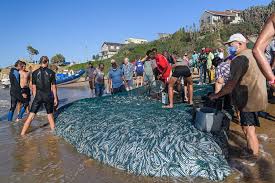
Sardine Run: South Africa is famous for the annual “Sardine Run.” This natural phenomenon occurs along the KwaZulu-Natal coast, where massive shoals of sardines migrate northward. It’s a spectacular event that attracts predators like dolphins, sharks, and seabirds, creating a feeding frenzy in the ocean.
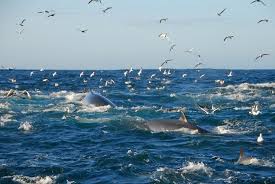
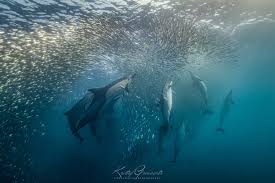
Bait Balls: During the Sardine Run, sardines form dense clusters called “bait balls.” These bait balls can be several metres wide and attract hungry marine animals. It’s a thrilling sight to witness predators working together to feast on these silver fish.
Economic Impact: The Sardine Run isn’t just a natural spectacle; it also has economic significance. Local communities benefit from tourism related to this event, as people flock to witness the incredible marine life in action.

Conservation Efforts: The Sardine Run highlights the importance of marine conservation. Researchers study the migration patterns, behaviour, and ecological impact of sardines, contributing valuable data to protect these fish and their ecosystem.
Ancient Origins
One theory proposed that the sardine run is a relic of ancient spawning behaviour from the last glacial period, about 10,000 years ago, when the now subtropical waters were cooler. It was thought that a distinct population of east coast sardines evolved to spawn in these warmer waters. However, the study revealed that the sardines in the run are not a distinct east coast population but come primarily from the colder Atlantic waters of the west coast.
Trapped by Mistaken Identity
These sardines, adapted to cooler waters, are drawn to the cold upwelling regions on the southeast coast, mistaking them for their home habitat. When the upwelling ends and water temperatures rise, the sardines find themselves in a deadly trap, pursued by predators and stranded in unsuitable conditions.
Implications and Further Studies
This research challenges previous assumptions and highlights the complexity of marine migrations. The sardine run, while a stunning natural spectacle, is a tragic journey for the sardines, driven by ancient genetic programming rather than environmental advantage. This discovery opens the door for further studies to better understand marine life and the intricate ways it interacts with its environment.