Homeowners Urged to Act Before Invasive Chromolaena Seeds
Elizabeth Forsdick, who heads up the Bazley Conservancy, has issued an urgent appeal to homeowners to help combat the spread of invasive alien plants in Bazley before the current seeding season begins.
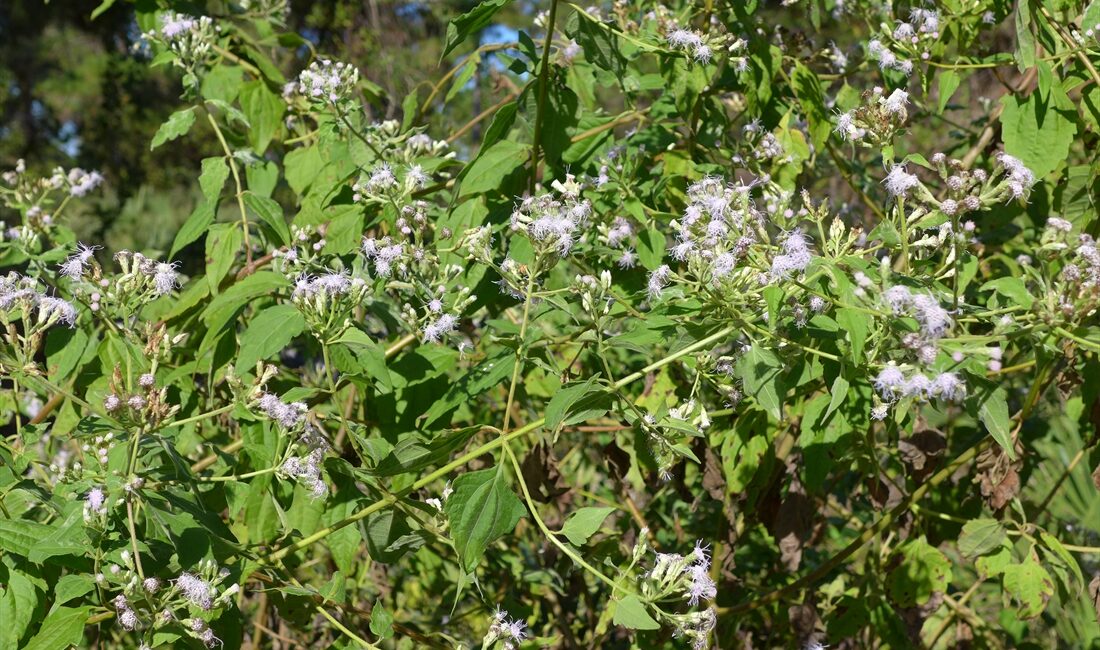
According to Elizabeth, there is only a small window of opportunity remaining to remove the highly invasive Chromolaena odorata before the plants flower and release thousands of windborne seeds.
“Time is of the essence, as the Chromolaena are about to flower,” warned Elizabeth. “Once they seed, the problem spreads rapidly throughout Bazley.”
Chromolaena (Triffid Weed) – One of South Africa’s most aggressive invasive plants
Chromolaena odorata, commonly known as Triffid Weed, is regarded as one of South Africa’s most aggressive invasive alien plants.
Accidentally introduced to the KwaZulu-Natal coast in the 1940s, the plant has spread extensively throughout the region, severely degrading indigenous forests, threatening wildlife habitats and impacting rural livelihoods.
The species thrives in Bazley’s warm coastal climate and spreads extremely quickly, with seeds easily dispersed by wind.
Under South Africa’s National Environmental Management: Biodiversity Act (NEMBA), Chromolaena is classified as a Category 1b invasive species, meaning it requires compulsory control and removal as part of an invasive species management programme.
Homeowners are legally required to remove and destroy these plants from their properties.
Lantana also a growing concern
Lantana, primarily Lantana camara, is another highly invasive plant species spreading throughout Bazley and the wider KwaZulu-Natal coastline.
Although attractive in appearance, with colourful pink, white and orange flowers and red berries, Lantana poses a severe ecological and agricultural threat in South Africa. The berries are spread easily by birds, allowing the plant to establish rapidly and outcompete indigenous vegetation.
Under South Africa’s National Environmental Management: Biodiversity Act (NEMBA), Lantana is classified as a Category 1b invasive species, meaning it is illegal to cultivate, trade or plant it.
Homeowners are legally required to remove and destroy the species from their properties.
Homeowners urged to act immediately
Residents are encouraged to inspect their properties immediately for signs of Chromolaena and Lantana growth.
Small Chromolaena plants can generally be pulled out by hand, while larger plants need to be cut back and the roots dug out or treated with Kaput.
Lantana should be cut down and the roots painted with Kaput to prevent regrowth.
“We need residents to please check their gardens and properties now,” said Elizabeth. “The earlier these plants are removed, the easier it is to control them.”
Conservancy teams working throughout the year
The Bazley Conservancy team has been working throughout the year removing Alien Invasive Plants (AIPs) from roadsides, verges, beaches, streams and surrounding natural areas in and around Bazley.
However, Elizabeth stressed that homeowner participation is critical if the spread of these invasive plants is to be contained.
Assistance available to residents
Residents who are unsure whether plants on their property are invasive can contact:
Elizabeth Forsdick – 082 701 3402 (WhatsApp)
Pete Harvey – 072 200 8126
Subject to their current workload in Bazley, Conservancy staff are also available to assist residents with clearing invasive plants from their properties. Elizabeth and Pete can also provide quotations for clearing work where required.
By acting now, homeowners can play an important role in protecting Bazley’s indigenous vegetation, biodiversity and natural environment from further invasion.
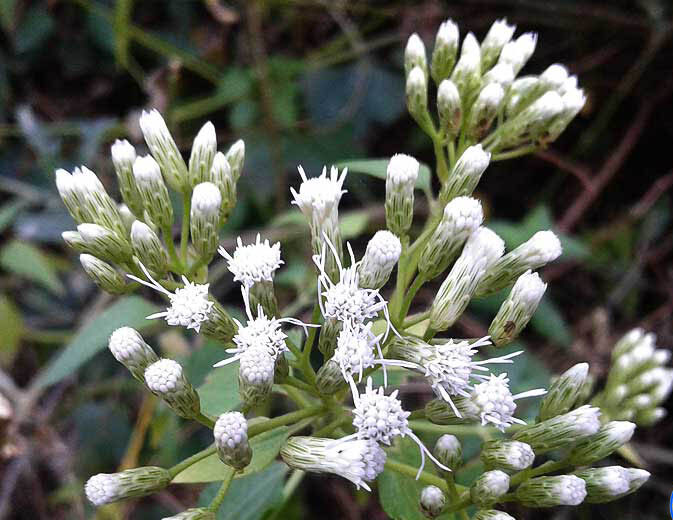
Close up photo of the flower of Triffid weed Chromolaena odorata
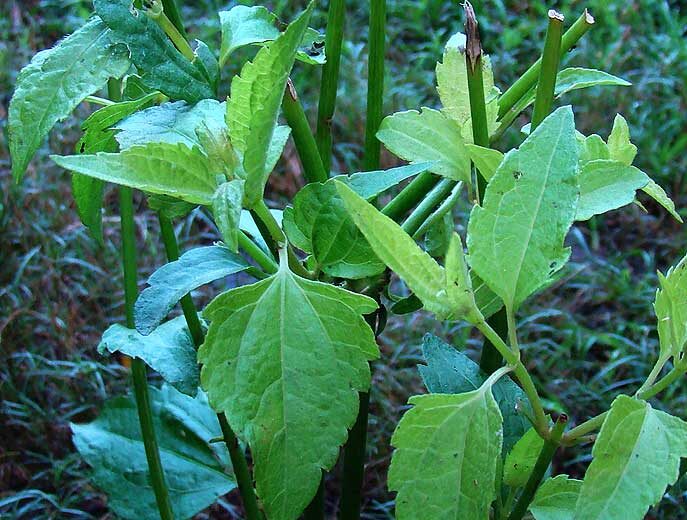
Triffid weed Chromolaena odorata showing leaf and stem.
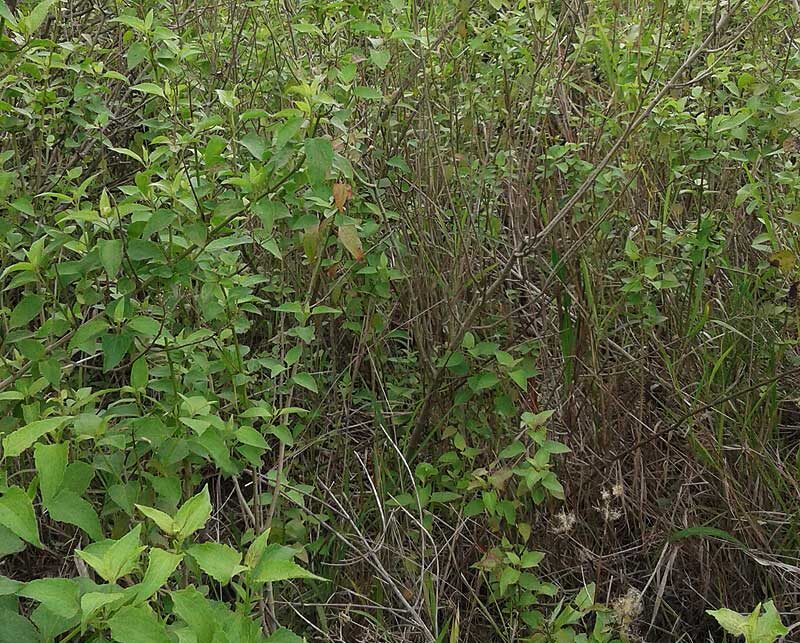
Triffid weed Chromolaena odorata dense thicket of mature plants.
Lantana is poisonous to humans and animals including cattle, sheep, horses, dogs and goats and is responsible for livestock mortalities amounting to millions of Rands every year in South Africa. It reduces the grazing potential of land and also excretes chemicals which reduce the growth of surrounding plants.