Bazley is not just a picturesque coastal village – it’s also a thriving habitat for an impressive variety of wildlife. Among the many animals that call our village home, mongooses are some of the most intriguing. These small, agile mammals are often seen darting across gardens, sandy paths, and near the estuary. Did you know Bazley is home to five types of mongoose? Let’s take a closer look at each species.
As a general comment, with the exception of the Banded Mongoose, the other four mongoose species are normally solitary, except during breeding season (generally in summer), when a courting couple or a female with young may be seen.
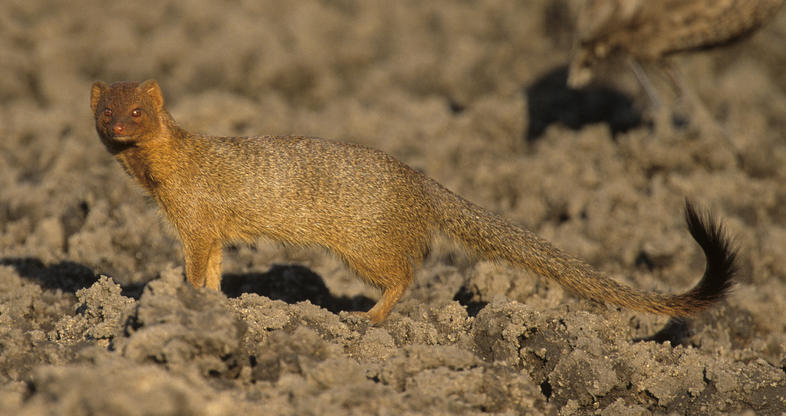
1. Slender Mongoose
The slender mongoose is easily recognised by its long, slim body and distinctive long black-tipped tail, which it holds curved over its back when running. True to its name, it is remarkably agile and fast, often seen hunting insects, small reptiles, and birds. It is also famous for its ability to fight snakes, including the Mozambique Spitting Cobra, which it overwhelms with lightning-fast attacks.
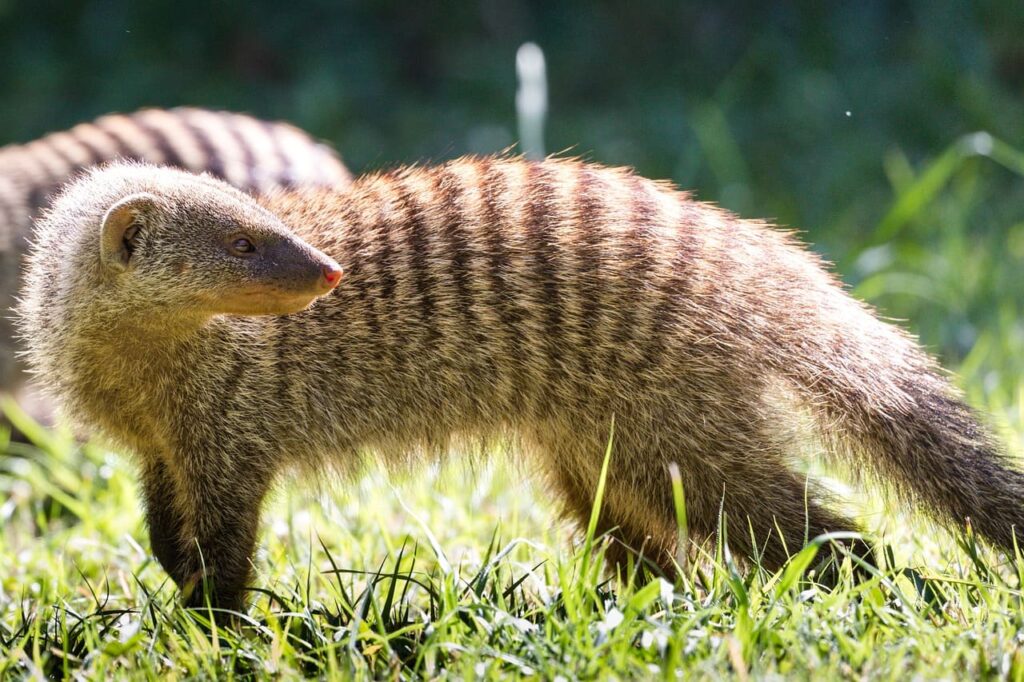
2. Banded Mongoose
The banded mongoose is the only social (gregarious) mongoose of the five and lives in troops of up to 30 individuals. It is easily recognised by the 10–12 dark bands across its back. These ground-dwellers often forage together, taking turns watching for predators while others hunt insects, small mammals, and eggs. Their strong social bonds make them fascinating to observe in groups.
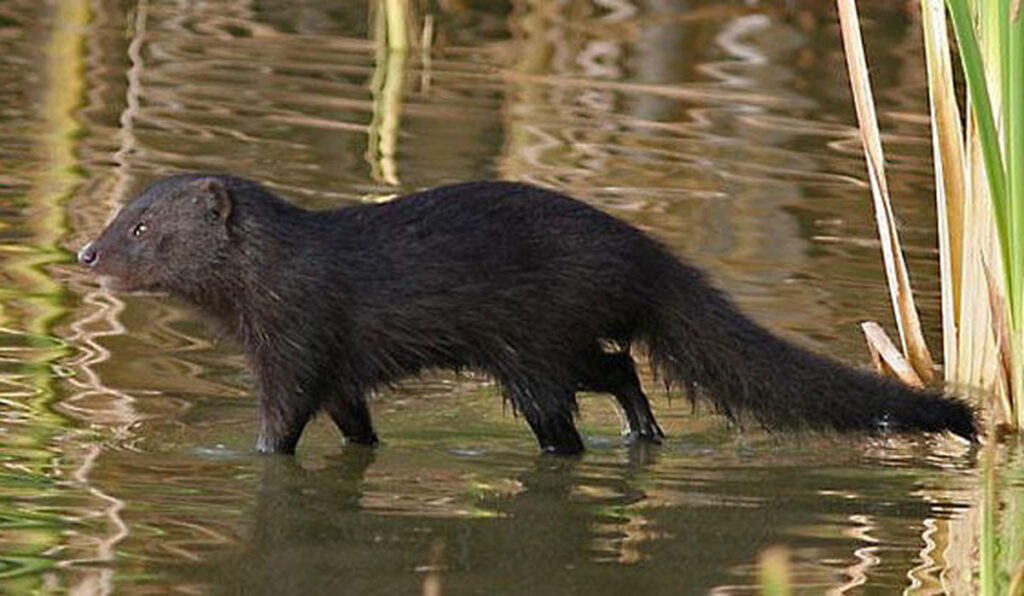
3. Water Mongoose
The water mongoose is adapted to wet environments such as rivers, wetlands, and estuaries. It forages mostly at night but is also crepuscular (active at dusk and dawn), so it is seldom seen. Its presence is often revealed by distinctive footprints, which show long, slender toes perfectly suited to moving in muddy, wet terrain. Its diet consists largely of fish, amphibians, and crustaceans, and it is an excellent swimmer.
4. Large Grey Mongoose
The large grey mongoose is bigger than its relatives and has a striking grey coat. It is normally solitary and has a varied diet including rodents, birds, and insects. Despite its size, it is quick and cautious, often disappearing into dense vegetation when approached.
5. White-tailed Mongoose
The white-tailed mongoose is one of the most distinctive species in Bazley, thanks to its bushy white-tipped tail. It is nocturnal and solitary, using its excellent sense of smell to hunt insects, rodents, and other small prey. Its striking tail is often held high when it moves, making it a memorable sight for lucky observers.
Slender Mongoose [Galerella sanguineal, also known as the Black-tipped Mongoose or the Black-tailed Mongoose.
Banded Mongoose [Mungos mungo]
Water mongoose, marsh mongoose (English); kommetjiegatmuishond (Afrikaans).
Large grey mongoose - Herpestes ichneumon
White-tailed Mongoose [Ichneumia albicauda]
Interesting Mongoose Facts
Mongooses are famous for their ability to fight snakes, including venomous ones like cobras.
Most mongoose species communicate with a variety of sounds, from whistles to growls, to signal danger or coordinate group activity.
They have highly developed senses of smell and sight, which help them track prey efficiently.
While most species are solitary, the banded mongoose thrives in social groups, providing protection and increasing hunting success.
Bazley’s mongooses are just one example of the rich wildlife that thrives in our coastal village. Whether you spot a slender mongoose darting through the bushes, a white-tailed mongoose exploring the dunes at night, or a troop of banded mongooses foraging together, these fascinating creatures are a reminder of the incredible biodiversity that surrounds us.